The vision system
that doesn’t blink.
Custom-installed computer vision for quick-service restaurants. Purpose-built cameras, on-site edge compute, and real-time intervention at the stations you choose. Machine oversight that is more accurate, more consistent, and never looks away.
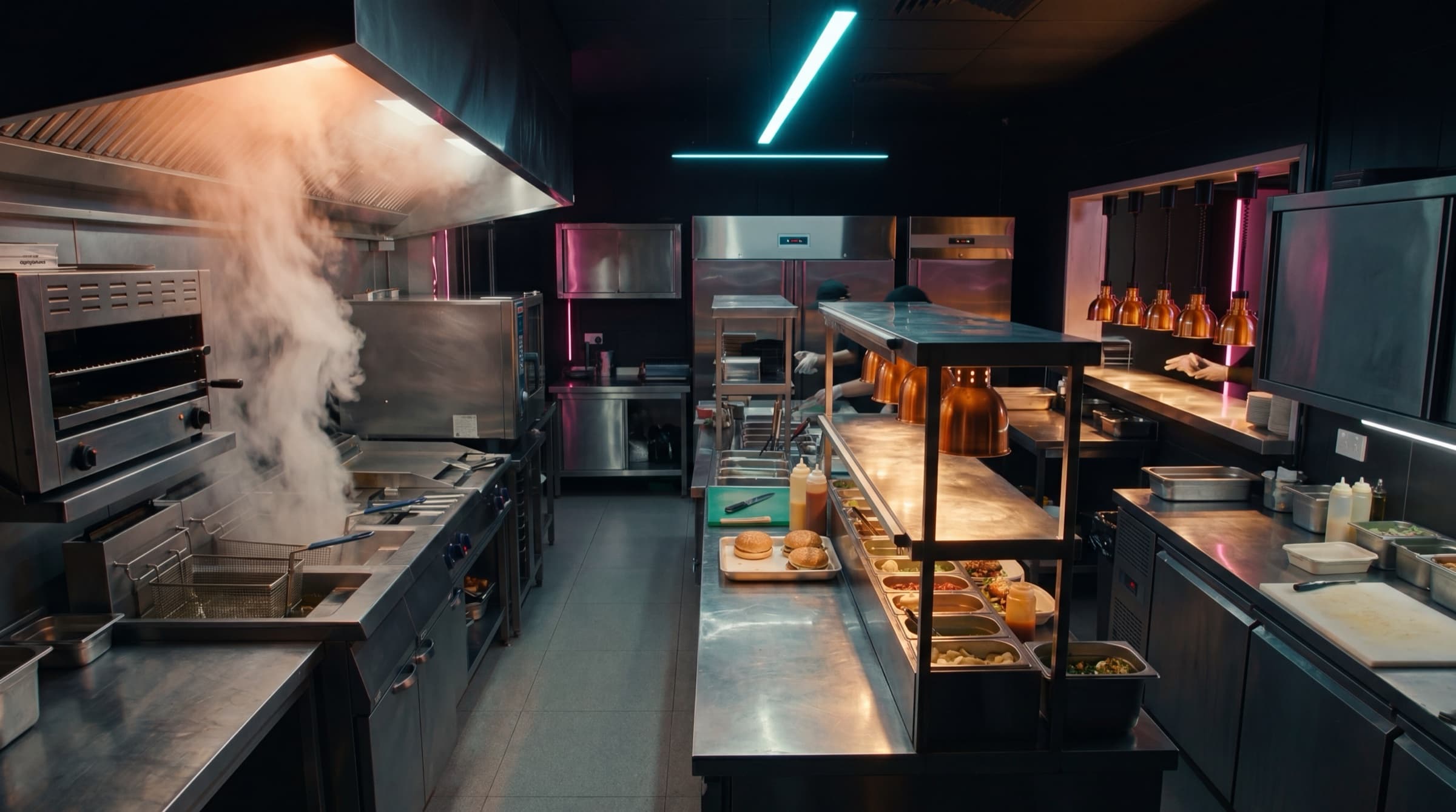
Humans can’t be every station,
every order, every second.
A quick-service restaurant runs eight to twelve stations across cook, prep, assembly, and pass. A typical shift produces hundreds of orders. Every order carries fifteen to thirty discrete quality and accuracy checkpoints. The math does not work for human oversight.
Attention fatigues
Human attention degrades within minutes. Drift gets worse, not better, as the shift wears on.
Coverage is partial
Even the best line lead watches one station at a time. The other stations run unobserved.
Events are fast
An assembly sequence takes seconds. A missing item is a fraction of that. Eye-blink fast.
Audits are backward
Camera review happens after a complaint. By then the cost has already compounded.
Every miss has a compounding cost.
These are the moments that drive refunds, NPS damage, complaints, and brand erosion. None are visible in real time today. All can be detected and resolved in real time by Fabrick Lens.
A vision system that intervenes.
Fabrick Lens is a modular, custom-installed computer vision platform for quick-service restaurants. Industrial cameras at the stations you choose to instrument, an on-site edge appliance, and signal fusion with the equipment already on your line. Start with one station, scale at your pace.
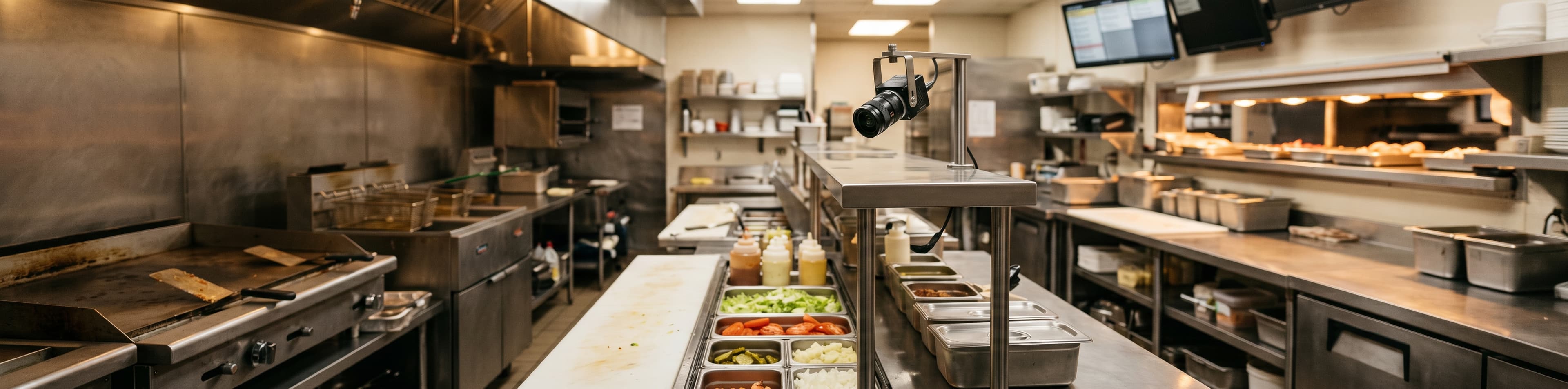
Pick the stations that matter most. Add cameras one at a time or instrument the whole line. The system is built to start small and scale at your pace.
Cameras at your priority stations
Task-specific models analyze every frame
Rules and fusion logic evaluate the scene
Operator alerted at the station, in real time
Detection is the start. Intervention is the point.
Real-time computer vision is only as valuable as the action it triggers. Fabrick Lens closes the loop. Every detected drift becomes an alert, an intervention, and an audit entry.
Five techniques. One vision system.
A real CV product is not one model. It is a stack: detection finds what is there, classification judges if it is right, action recognition reads the sequence, tracking holds identity through occlusion, and fusion correlates all of it with equipment and order data.
Anatomy of a detection.
Every detection produces four things: a class label, a confidence score, a bounding box, and a tracked centroid. Together they answer what, how sure, where, and where next.

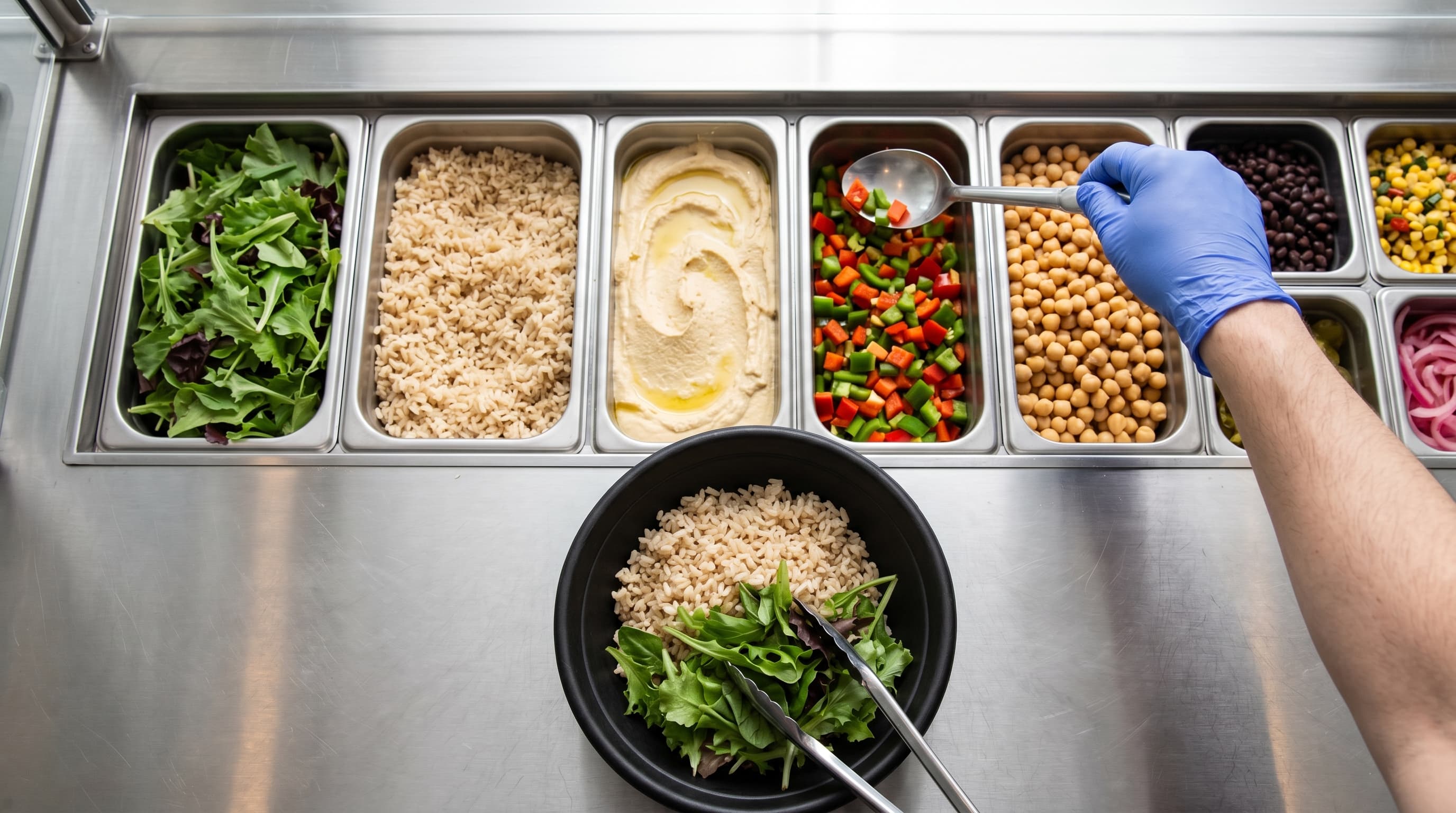
Detection finds it. Classification judges it.
Once an item is located, a fine-grained classification model answers the harder question: is it right? This is where pixel-level quality assessment happens, and where a bounding box alone is not enough.
Some quality questions only exist over time.
A single frame cannot tell you whether a build sequence was followed or a hygiene step was skipped. Action recognition reads a sequence of frames, building confidence as the motion completes.
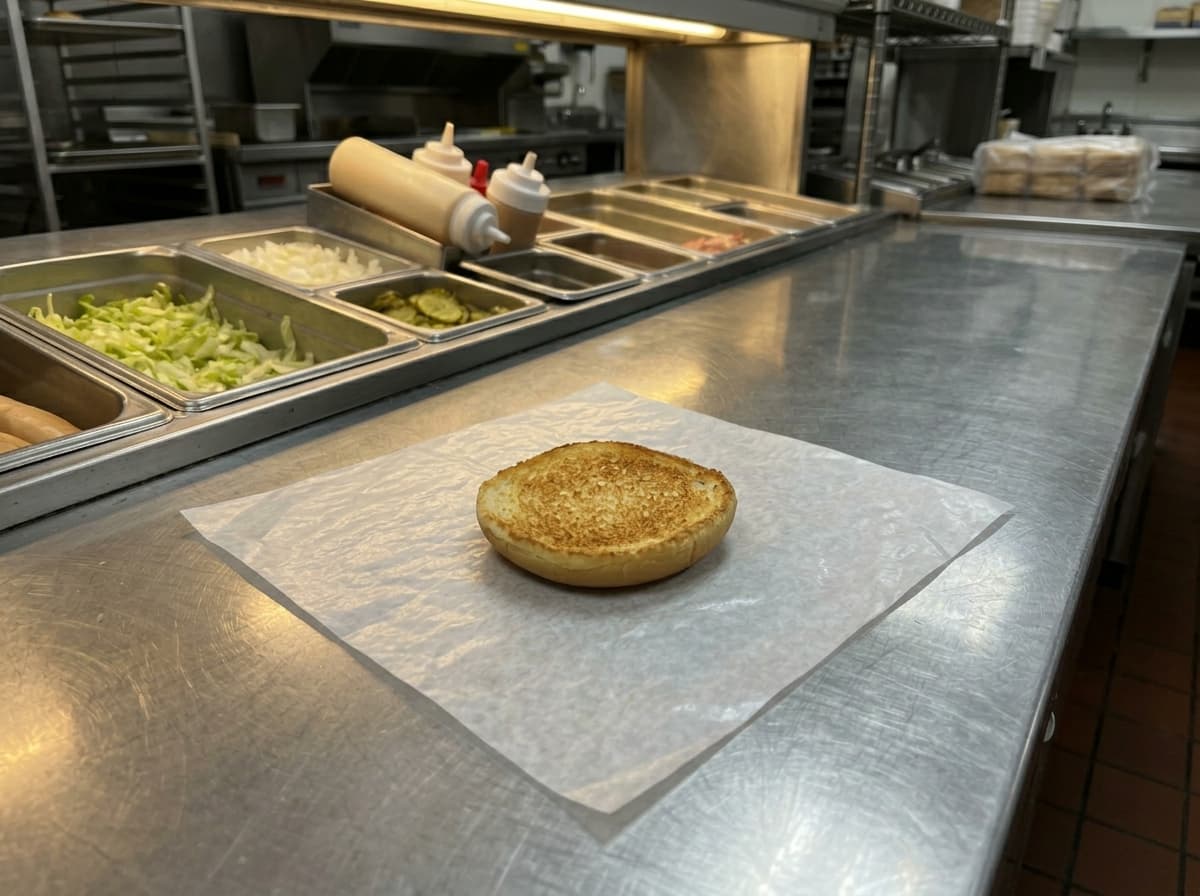
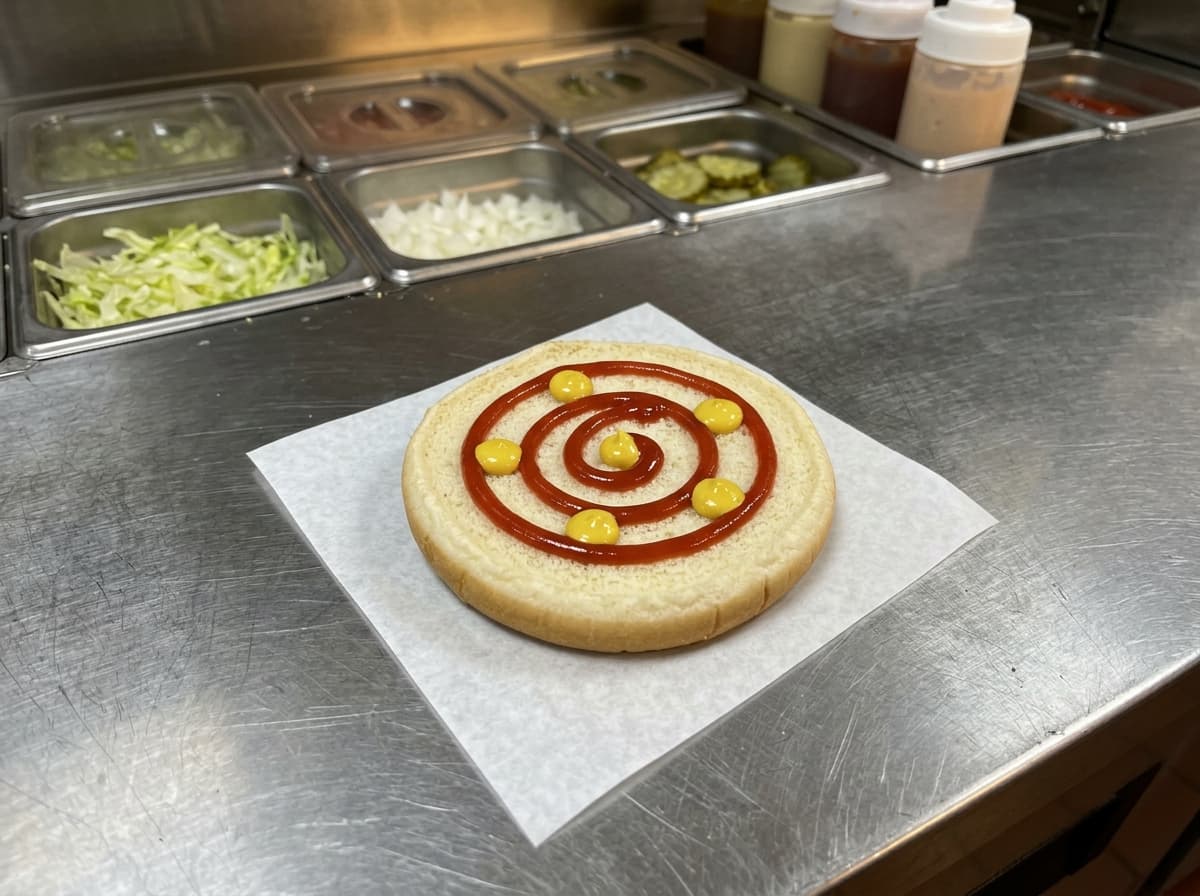
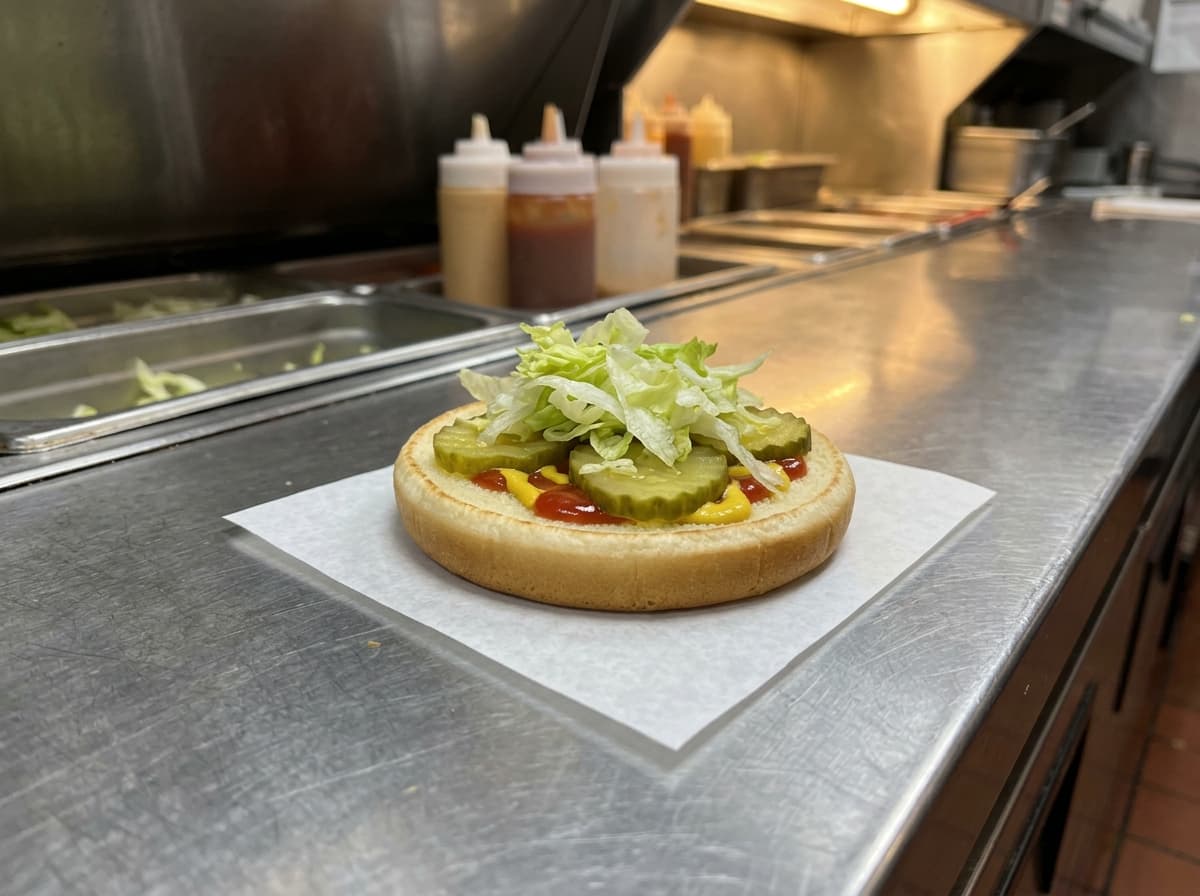
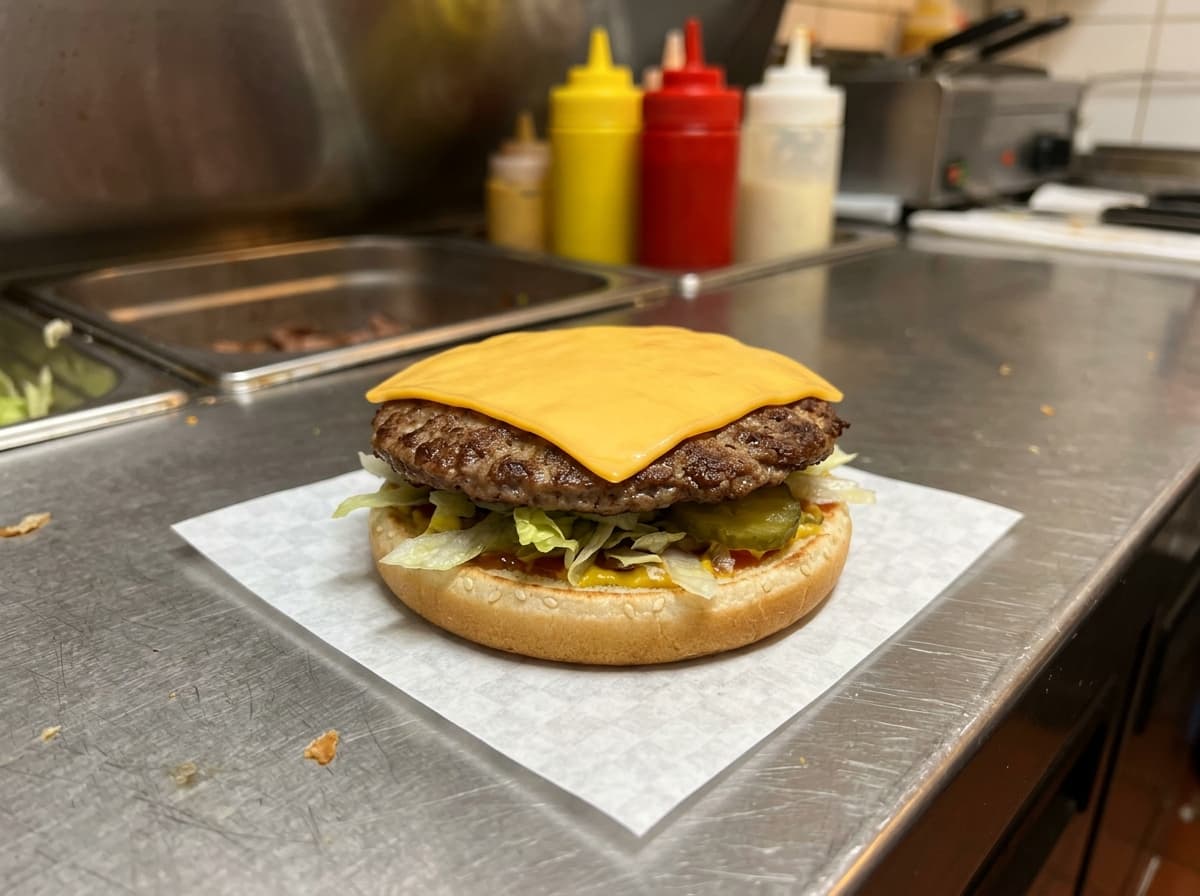
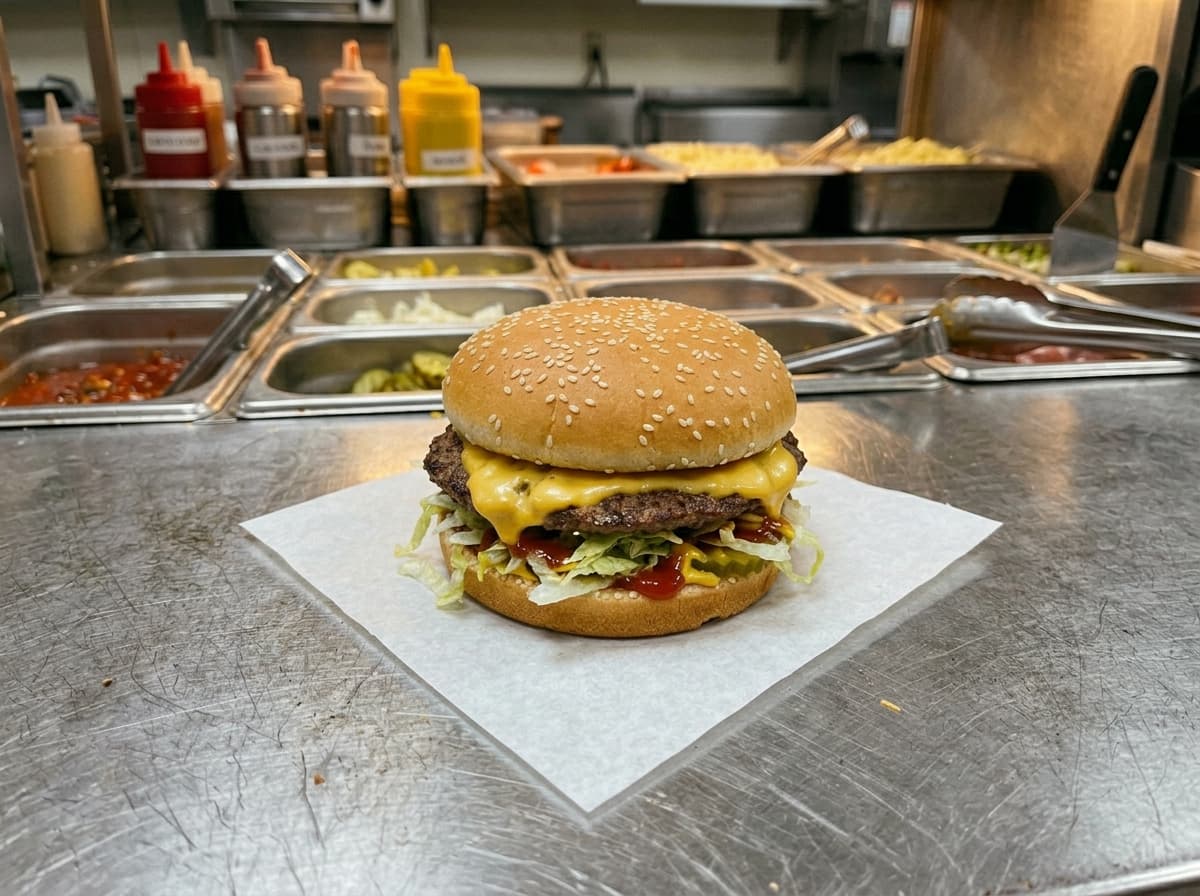
A single frame cannot confirm a process step. Action recognition reads the sequence, and confirms the step actually happened.
One order, followed end to end.
Tracking holds a persistent identity on an order as it moves across stations and through occlusion. This is what makes true ticket-time decomposition possible. Not just how long, but where the time was spent.
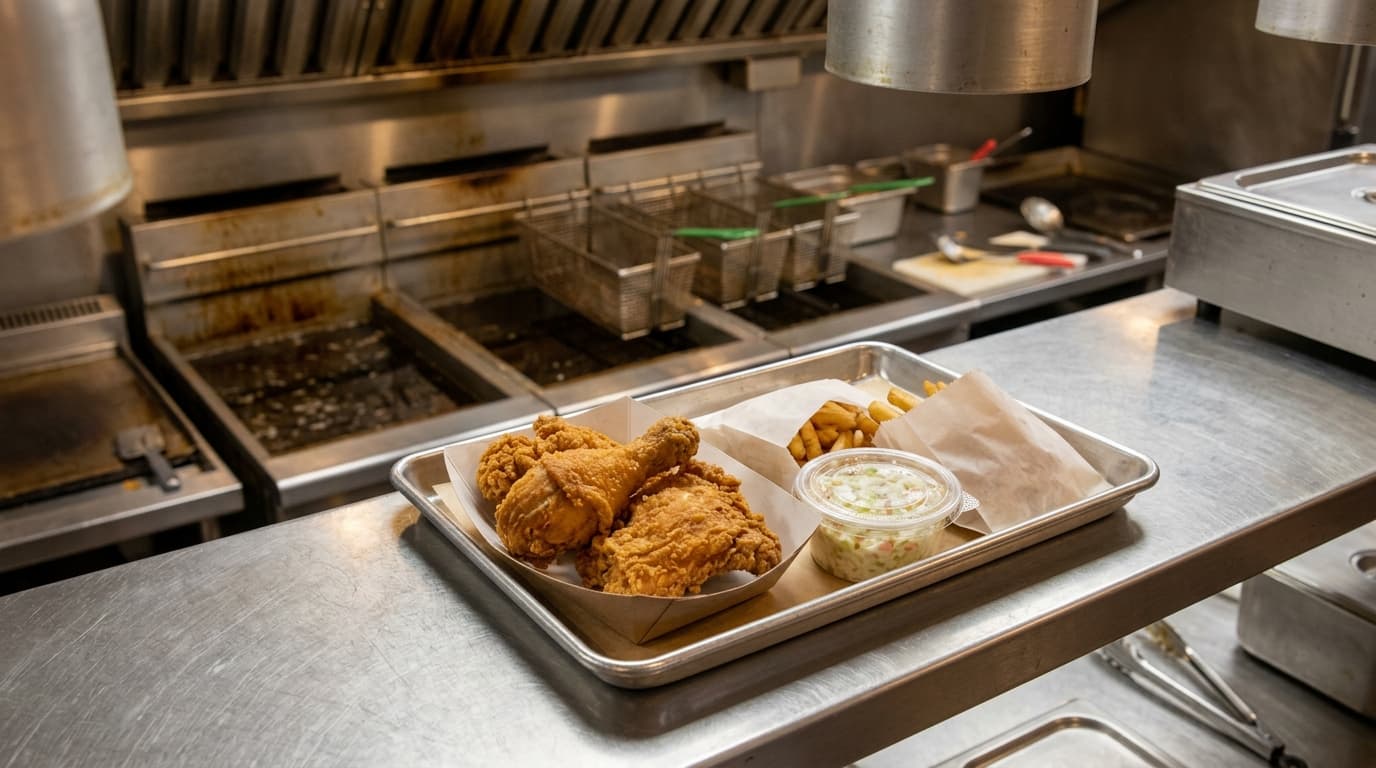
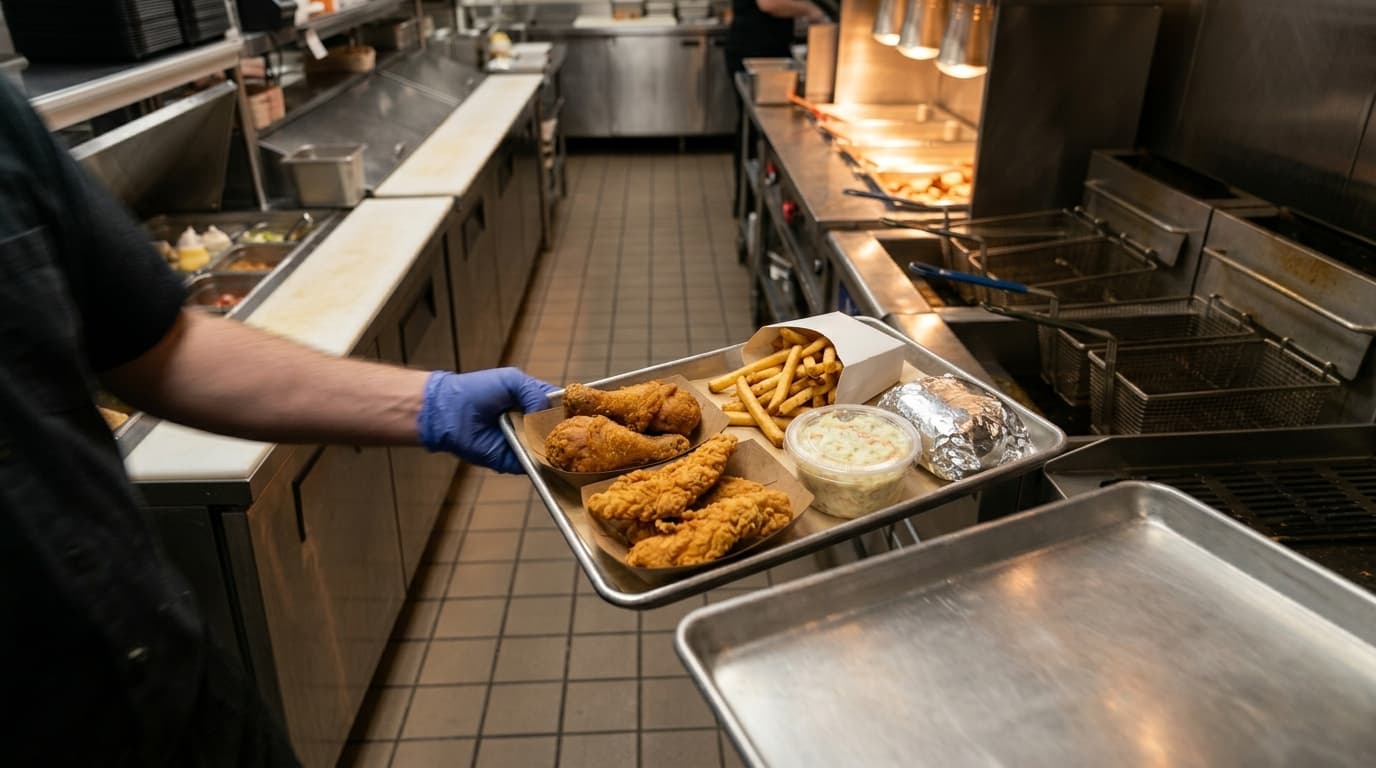
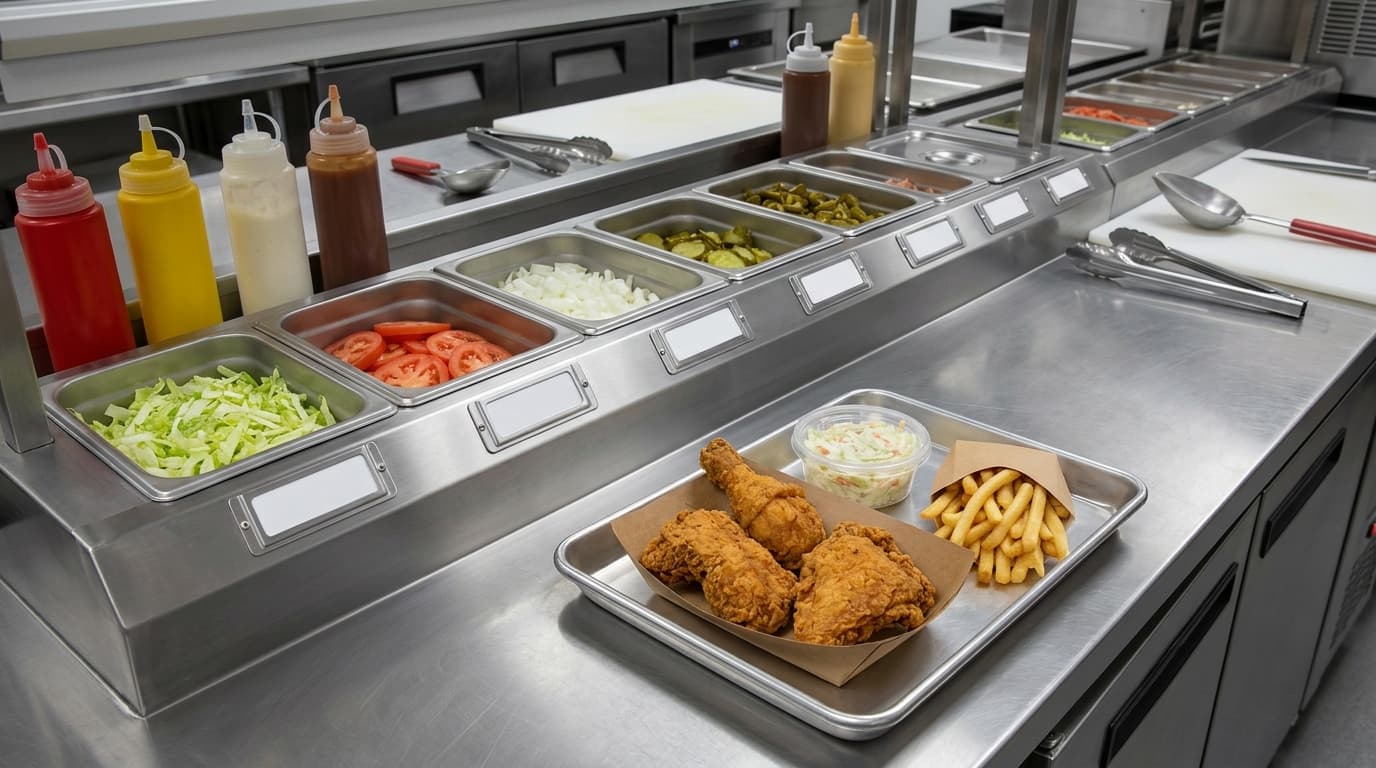

Persistent identity. One order held across stations and through occlusion. ByteTrack and DeepSORT re-ID.
Vision plus sensors plus KDS. The layer no one else has.
Three input streams correlated frame by frame inside a single fusion core. Catches what one signal alone misses, separates equipment fault from human error, and confirms rather than just detects.
Detection, classification, action, tracking
Fryer temp, cook timers, holding-cabinet state, weight sensors
Order content, modifiers, timestamps, bump events
- Catches what one signal alone misses
- Separates equipment fault from human error
- Confirms, not just detects
The fryer reports done-at-temp. Vision reports the product is under-colored. Neither signal alone catches it. Together they say the equipment is drifting, not the cook.
Data to deployment, then it never stops.
Every custom model moves through the same six-stage lifecycle. The first pass produces a working model. The loop keeps it accurate as your menu, lighting, and seasons change.
This team has shipped production CV before.
Fabrick Lens is not a first attempt. The custom-model approach, the edge architecture, and the QSR domain work all trace to production deployments the team has built and run.
Fresh-produce vision at scale
Custom vision models for produce quality and self-checkout. 800+ SKUs in production, retrained per category.
QSR video analytics platform
Quality and consistency analytics purpose-built for a multi-unit QSR operator. Vision plus operational signal.
Edge-deployed production CV
Edge-first computer vision with on-site inference and real-time event generation. The architectural lineage for Lens.
Six categories. Every one tied to the P&L.
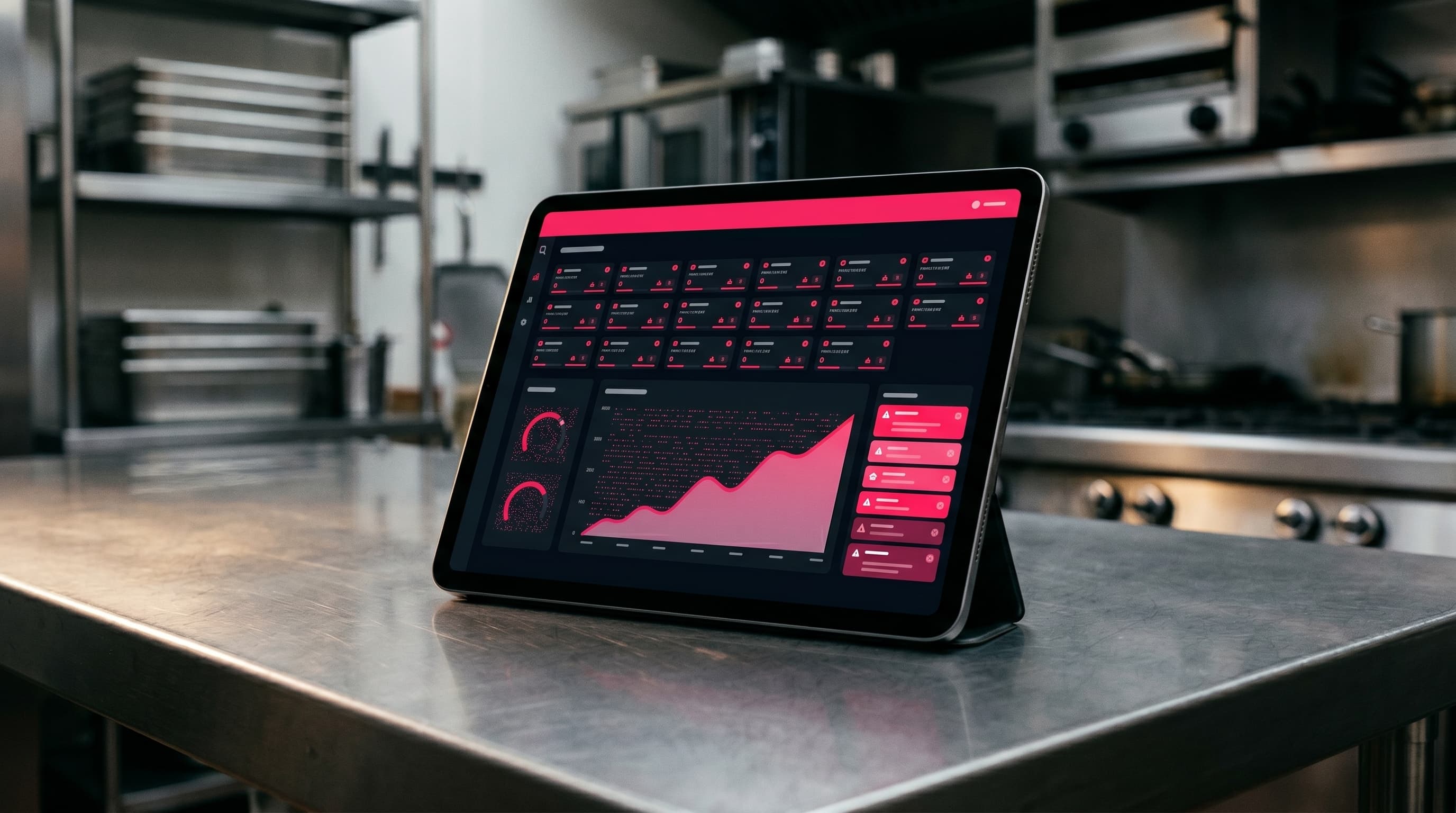
Built from the way a multi-unit operator actually thinks. Each category ties to a revenue line or a brand-risk line, and each is measured continuously through the fusion of video and equipment data.
Order Accuracy
Perfect-order rate, item-level error rate, count accuracy, modifier compliance, condiment attach rate, packaging accuracy.
Food Quality & Consistency
Cook doneness conformance, cook-time conformance, temperature at handoff, hold-time compliance, portion and build consistency.
Speed & Throughput
Ticket time decomposed by station, station dwell, cook recovery time, drive-thru time, throughput per labor hour, predicted SLA breach.
Food Safety & Compliance
Temperature danger-zone events, hold-time violations, handwash compliance, cross-contamination risk, vision-verified HACCP checkpoints.
Equipment Health & Calibration
Calibration drift, oil quality and fryer health, recovery-time degradation, holding-cabinet conformance, sensor-fault detection.
Labor & Waste Efficiency
Staffing vs demand, throughput per labor hour, SOP adherence, overproduction waste, portioning cost variance, remake and refire rate.
The KPIs that only exist with fusion.
These five do not exist in a camera-only system or an equipment-only system. They require video and equipment data cross-referenced, frame by frame. They are the reason signal fusion is the moat.
Calibration drift
Fryer reports done-at-temp. Vision reports under-colored. The equipment is the problem, not the cook.
True ticket-time decomposition
Not 'the order took six minutes' but 'it lost ninety seconds at assembly.' Tracking plus KDS timestamps.
Sensor-fault detection
Holding cabinet reports a full pan. Vision sees it empty. The sensor needs service, flagged automatically.
Root-cause quality
Oil TPM rising, product color darkening in step. The fries are worse because the oil is spent.
Predictive SLA breach
Queue depth and per-station throughput forecast a ticket-time miss sixty to ninety seconds before it happens.
Cameras, compute, sensors, AWS-native cloud.
Three zones. A custom install in the restaurant, one edge appliance running vision and fusion locally, and AWS-native managed services for training, fleet management, and reporting. Designed for AWS QSR customers, end to end.
Custom installation per store
One per restaurant
Managed services

Pilot to production. Then chain rollout.
Custom install means a structured roadmap. Each phase has clear outputs and acceptance criteria. Pricing tiered by chain size to support pilot economics and scale economics.
Discovery
Camera audit, station prioritization, AWS architecture review, pilot store selection.
Install + pilot
Custom camera install, edge appliance, first signature model, UAT on pilot station.
Hardening
Additional models, sensor fusion, dashboard tuning, multi-store readiness.
Chain rollout
Zero-touch provisioning, per-store onboarding, continuous model expansion.
See every station.
Catch every drift.
Intervene in real time.
Production-grade computer vision for QSR operations. Custom models, custom installed, AWS-native. Methodology you can audit, KPIs you can run the business on.